
Somewhere between the proposal and the wedding, most couples run into the same realization: the engagement photos are not really about the save-the-dates. They are the first time you will ever be photographed together as an engaged couple, the images your parents will frame, and, if you are honest, the trial run that decides whether you actually enjoy being in front of a camera on your wedding day. Choose well and you get an afternoon that feels like a date with a camera nearby. Choose badly and you get two hours of being told to “look natural” while you both feel anything but.
The difference almost never comes down to gear or price. It comes down to how carefully you vetted the photographer weeks before the session. This guide covers exactly how to choose the best engagement photography service for you: what to look for in a portfolio, why style matters more than star ratings, whether your photographer should also shoot weddings, the best places and seasons for island sessions, what to wear, how long to plan for, and how far ahead to book.
Why Engagement Photos Are Worth Taking Seriously
It is tempting to treat engagement photos as a nice-to-have, a quick session to get a usable photo for the save-the-date and the wedding website. But they earn their place for reasons most couples only appreciate afterward.
The most practical one is rehearsal. Very few people are naturally comfortable being photographed, and your wedding day is a poor time to discover that. An engagement session lets you learn how your photographer works, how they direct, how they talk you through a pose, and how you two look and feel on camera, all in a low-stakes setting where nothing is on a schedule. Couples who do an engagement session almost universally arrive at their wedding more relaxed in front of the lens.
The second reason is relationship. If the same photographer is shooting your wedding, the engagement session is where you stop being strangers. By the wedding day, they know how you interact, what makes you laugh, which side each of you prefers, and you know their rhythm. That familiarity shows up directly in the wedding photos.
And the third is simply that this chapter is short. The engaged season lasts a matter of months, and it is the only stretch of your life you will be exactly this: committed, planning, a little giddy, not yet married. It deserves better documentation than a phone photo taken by a passerby.
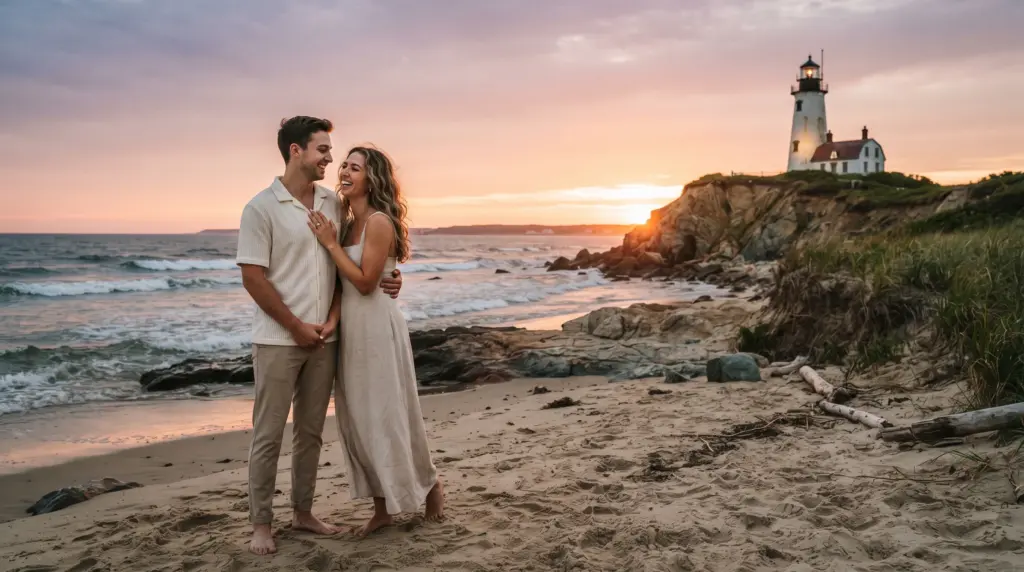
How to Choose the Best Engagement Photographer: The Vetting Framework
Once you have decided to book, the actual selection comes down to a handful of checks. Work through them in order.
Look at Full Galleries, Not Just Highlight Reels
Every photographer’s Instagram is their ten best frames from a hundred sessions. That tells you very little. Ask to see two or three complete galleries from real engagement sessions, start to finish. A full gallery shows you consistency: whether the tenth-best photo is still good, whether the light is handled well throughout, whether the couple looks comfortable across the whole set or only in the frames that made the grid. Consistency is what you are actually buying.
Match the Style to Your Taste
This is the most underrated step. Engagement photography spans genuinely different aesthetics, and none of them is objectively better than the others, but one of them is probably right for you.
Documentary or candid work is loose and unposed, favoring real interaction over arrangement. It produces images that feel like moments rather than portraits.
Editorial or fine art work is more deliberate: considered composition, styling, light shaped intentionally. It produces images that feel like a magazine spread.
Lifestyle work sits between the two, gently directed but aiming for natural-looking results.
Look at the photographers you are considering and ask honestly which of those you are drawn to. Booking a documentary shooter and then asking for editorial portraits, or vice versa, is how couples end up disappointed with technically excellent photos.
Check That They Actually Know the Location
This matters far more for outdoor sessions than most couples expect. A photographer who has shot a location dozens of times knows where the sun sets relative to the bluff, which beach is unusable at high tide, which cobblestone street is quiet at seven in the morning and mobbed by ten, and where to go when the fog rolls in and the plan needs to change. A photographer working a location for the first time is solving those problems on your time.
When you search for engagement photography near me, that local fluency is a genuine part of what you are paying for, not a nice extra.
Ask About the Experience, Not Just the Images
The photos are the deliverable, but the session is the thing you actually live through. Ask how they run a session. Do they direct heavily or let you interact? How do they help couples who feel awkward? What does the first fifteen minutes look like? A photographer who has a real answer to these questions has thought about the human part of the job. One who only talks about gear and editing has not.
Confirm the Deliverables Before You Book
Get clear, in writing, on: how many edited images you receive, what the turnaround time is, how the gallery is delivered, whether you get print rights, whether high-resolution files are included, and whether there are additional costs for extra edits or a second location. “You’ll get a beautiful gallery” is not a deliverable. A number and a date are.
Meet Them First
A quick video call tells you something no portfolio can. You are going to spend a couple of hours with this person during an emotionally significant moment, and if the conversation feels stiff on a call, it will feel stiffer with a camera pointed at you. Chemistry is a legitimate selection criterion here, not a soft one.
Do They Also Offer Wedding Photography? (And Why You Should Ask)
Ask this early, even if you already have a wedding photographer. The answer shapes the value of the session significantly.
If the same photographer shoots both, the engagement session becomes a genuine investment in your wedding photos rather than a standalone purchase. You get the rehearsal benefit, they learn how you move and interact, and the two galleries share a visual language, which matters if you plan to display them together or build a wedding album that opens with the engagement.
Many couples book engagement and wedding coverage with the same studio for exactly this reason, and full-service photographers who offer both, along with related work like family portraits for the rehearsal weekend or the years after, tend to be set up to handle a whole arc rather than a single session. Capture Nantucket, for example, offers wedding and engagement photography services in Nantucket alongside family, event, and portrait work, so the same team can carry a couple from the proposal through the wedding and beyond.
If your engagement photographer does not shoot weddings, that is not disqualifying, plenty of excellent photographers specialize. Just know you are buying a beautiful session rather than a rehearsal, and plan accordingly.
The Best Locations for Engagement Photos on Nantucket
If you are shooting on the island, the location choice does a lot of the work. Nantucket offers a genuinely unusual range for a place you can drive across in half an hour, and each spot has its own character.
Siasconset and the Bluff Walk
‘Sconset, as everyone calls it, sits on the island’s east end and delivers the rose-covered cottages and weathered shingle that most people picture when they picture Nantucket. The Bluff Walk offers dramatic elevation over the Atlantic, and the whole village photographs beautifully in the soft light of early morning. Because it faces east, it is a sunrise location, not a sunset one, which is exactly why it stays quiet when the rest of the island is busy.
Brant Point Lighthouse
The most recognizable landmark on the island, and the first thing you see arriving by ferry. It is iconic, compact, and unmistakably Nantucket in a single frame. It is also popular, so early morning or late evening sessions are worth planning around the crowds.
Madaket
The island’s sunset. Madaket faces west, and on a good evening the sky over the water genuinely earns its reputation. If you want warm, golden, romantic frames with open water behind you, this is the end of the island to be on when the light goes.
Downtown and the Cobblestones
Main Street’s cobblestones, the brick sidewalks, the historic storefronts and gray-shingled facades give you a completely different look: a town session rather than a beach one. It works especially well for couples who want something a little dressier, or who want the photos to feel like the island rather than like a beach anywhere.
The Beaches
Steps Beach, Cisco, Surfside, and Jetties each have a distinct personality, from the dramatic staircase entrance and calmer north-shore water to the open surf of the south shore. Beach sessions are the classic choice for a reason, but be honest with your photographer about whether you actually want sand in your shoes, and check the tide, because a beach that is spacious at low tide can be a narrow strip at high.
The Moors, Sanford Farm, and the Bogs
Away from the water, the island’s interior offers open moorland, walking trails, and the cranberry bogs, which turn a deep, extraordinary red in the fall. These locations feel quieter and more pastoral, and they are a genuinely underused option for couples who want something other than a beach or a lighthouse.
Sankaty Head Lighthouse and Great Point
Sankaty’s red-and-white banding on a bluff over the ocean is one of the island’s great images. Great Point, at the far northern tip, is even more dramatic and considerably harder to reach, it generally requires an oversand vehicle permit and a four-wheel-drive vehicle, so it is only worth planning if your photographer is set up for it. Ask before you assume.
The Best Time of Year for Island Engagement Photos
Seasonality on a summer island is a bigger factor than it would be almost anywhere else, and it cuts in a few directions.
Summer brings the warmest weather, the longest days, and the most reliable beach conditions, but it is also peak season. The island is at its busiest, popular locations are crowded, and photographers book out earliest for these dates. If summer is what you want, book far ahead.
Early fall, roughly September into October, is many photographers’ quiet favorite. The light gets warmer and lower, the crowds thin dramatically after Labor Day, the water is still warm enough to be near, and the moors and bogs start turning color. If you have flexibility, this is often the best combination of conditions and calm.
Spring, particularly late April into May, brings the island back to life, daffodils, greening moors, cool but workable weather. It is quieter than summer and has a fresh, hopeful quality that suits an engagement session well.
Winter is dramatic and almost entirely uncrowded. Gray skies, empty beaches, moody light. It is not for everyone, and much of the island’s commercial life is closed, but for the right couple it produces images nobody else has.
Golden Hour and the Island’s Geography
Wherever you shoot, the hour after sunrise and the hour before sunset produce the softest, warmest light, and any experienced photographer will build the session around it. On Nantucket, that has a geographic consequence worth knowing: the east end, ‘Sconset and Sankaty, is where you go for sunrise, and the west end, Madaket, is where you go for sunset. A photographer who suggests a location without reference to the time of day has not thought it through.
About the Fog
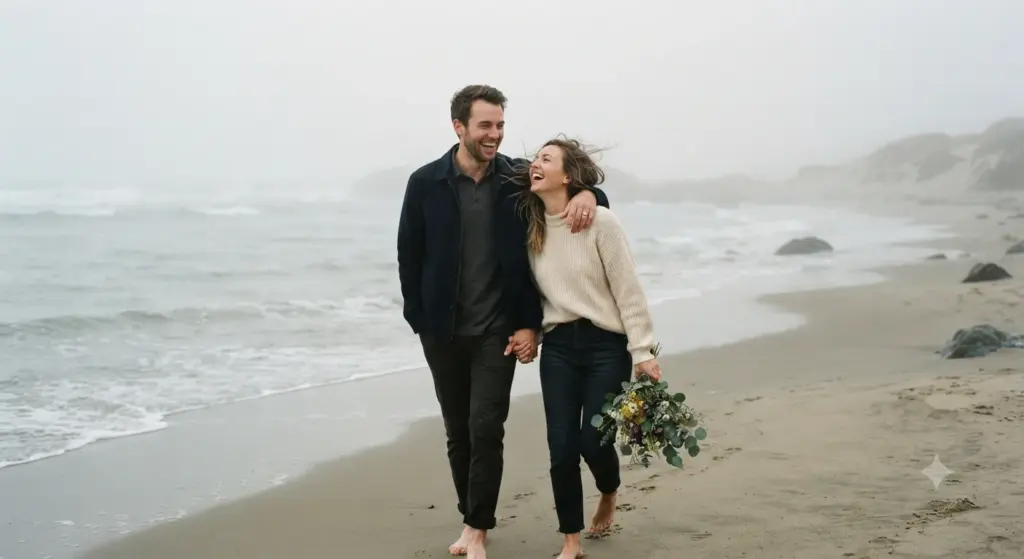
Nantucket fog is legendary, and a first-time visitor often treats it as a session-ruiner. An experienced island photographer treats it as an opportunity. Fog softens light beautifully, isolates a couple from a busy background, and produces atmospheric, moody images that a clear blue sky simply cannot. The right photographer will have a plan for it rather than a panic about it, which is another good reason to ask about local experience before you book.
How Far in Advance Should You Book?
Booking timelines vary by market, but a few general patterns hold.
For a typical session, four to eight weeks of lead time gives you a comfortable range of dates and time slots. For peak season on a destination island, where a limited number of photographers serve a compressed summer calendar, three to six months is a much safer window, and popular weekends can go earlier than that. If your session is tied to a specific date, a proposal anniversary, a weekend when family is visiting, book as early as you possibly can, because that date is not flexible and the calendar is.
If you are also booking wedding coverage with the same photographer, most couples secure that first, often a year or more out, and schedule the engagement session afterward once the wedding date is locked.
What to Wear for Engagement Photos
Wardrobe is the single most common source of pre-session anxiety, and the guidance is simpler than most couples fear.
Coordinate, do not match. Two people in identical white shirts and jeans read as a uniform. Two people in complementary tones within the same general palette read as a couple.
Favor solid colors and soft textures. Busy patterns, logos, and tight stripes compete with your faces and can create visual noise. Solids let the viewer look at you.
Choose colors that agree with the setting. Coastal sessions tend to reward soft neutrals, creams, blues, warm earth tones, colors that sit alongside sand and water rather than fighting them. Bold jewel tones can work beautifully in a town or fall-moor setting.
Wear something you can actually move in. You will be walking, sitting on sand, climbing a few stairs, being asked to turn and look at each other. An outfit you are constantly adjusting shows in every frame.
Consider two looks. Many sessions comfortably accommodate one dressier outfit and one relaxed one, which doubles the range of the gallery. Ask your photographer whether the session length allows it.
Do not forget the practical. Layers for wind, which on an island is not optional. Shoes you can walk in and a nicer pair to swap into. And if you are on sand, plan to be barefoot in at least some of it.
How Long Does an Engagement Session Take?
Most engagement sessions run somewhere between one and two hours, and there is a reason for that range rather than a fixed number.
The first fifteen or twenty minutes are almost always warm-up. You feel self-conscious, the photographer is reading how you interact, and the photos from this stretch are rarely the ones you end up loving. By the middle of the session, most couples have forgotten the camera is there, and that is when the good frames happen. A session shorter than an hour often ends right as you were starting to relax.
Sessions that include two locations, an outfit change, or significant travel between spots, common on an island where the sunrise and sunset ends are on opposite sides, run closer to two hours or more. Confirm the length when you book, and ask what happens if you want to keep going.
Red Flags Worth Noticing
A few patterns reliably predict disappointment.
No full galleries available, only curated highlights. Vague deliverables with no number of images or turnaround date. No contract, which protects both of you. Wildly inconsistent quality across their visible work, which suggests the good frames are luck rather than process. A style that does not actually match what you have asked for, paired with reassurance that they can “shoot anything.” Slow, vague communication during booking, which rarely improves afterward. And a price that is dramatically below every other quote you have received, which usually means inexperience or a business that will not be around when you ask for your gallery.
Conclusion: Choose the Person, Not Just the Portfolio
The best engagement photography service for you is the one whose full galleries you love, whose style genuinely matches your taste, who knows the light and the ground you will be standing on, who can tell you exactly what you will receive and when, and who you actually enjoy talking to. Get those five right and the session takes care of itself.
If you are planning an island session, Capture Nantucket offers professional engagement photography Nantucket couples book alongside wedding, family, and portrait work, with the local knowledge to plan around the island’s light, tides, seasons, and famous fog. Explore their wedding and engagement photography services, browse the portfolio to see whether the style fits yours, or call (774) 236-1329 to check availability for your date. Book the photographer whose work you would still want on the wall in thirty years, and enjoy the afternoon.
FAQs
How do I choose the best engagement photographer?
Review two or three complete galleries rather than highlight reels, confirm their style genuinely matches your taste, check that they know the locations and light well, ask how they run a session, get deliverables and turnaround in writing, and have a quick call to see whether you click with them personally.
Where are the best locations for engagement photos on Nantucket?
Siasconset and the Bluff Walk for sunrise and classic cottages, Brant Point Lighthouse for the iconic island frame, Madaket for sunsets over the water, downtown cobblestones for a dressier town look, the beaches for a classic coastal session, and the moors and cranberry bogs for something quieter, especially in fall.
What is the best time of year for Nantucket engagement photos?
Early fall, September into October, is often the sweet spot: warm low light, thinner crowds, and the moors and bogs turning color. Summer offers the best beach weather but the biggest crowds and earliest booking pressure. Spring is fresh and quiet, and winter is dramatic and nearly empty.
How far in advance should I book an engagement session?
Four to eight weeks works for most sessions, but for peak season on a destination island, three to six months is safer, and popular summer weekends can book out even earlier. If your date is fixed, book as early as you can.
What should we wear for engagement photos?
Coordinate rather than match, favor solid colors and soft textures over busy patterns and logos, pick a palette that suits the setting, wear something you can genuinely move in, bring layers for wind, and consider two looks if the session length allows it.
How long does an engagement photo session take?
Most sessions run one to two hours. The first fifteen to twenty minutes are usually warm-up, so anything shorter than an hour tends to end right as you are getting comfortable. Sessions with two locations or an outfit change run closer to two hours or more.
Do engagement photographers also shoot weddings?
Many do, and it is worth asking early. Booking both with the same photographer turns the engagement session into a rehearsal, builds familiarity before the wedding day, and gives both galleries a consistent visual style. If they only shoot engagements, that is fine, just know what you are buying.
What happens if it is foggy or the weather turns?
An experienced coastal photographer treats fog as an asset rather than a problem. It softens light, simplifies backgrounds, and produces genuinely atmospheric images. Ask any photographer you are considering how they handle changing conditions, since a real local will have a plan rather than a panic.